每次寫英文碰到「告訴」,你是不是還在 tell 和 say 之間猜拳?其實這四個詞各有固定的句型規律,只要看清楚規律,選詞就不再是賭運氣。這篇文章給你一棵決策樹、4 條文法規則和真實對話練習,讓你從此選詞有依據。
快速定義: Tell(過去式:told)意思是把資訊或指示直接給某個特定的人,中文最接近「告訴」(gàosù)。它幾乎永遠需要一個受詞——你 tell 某人 某件事。
重點整理
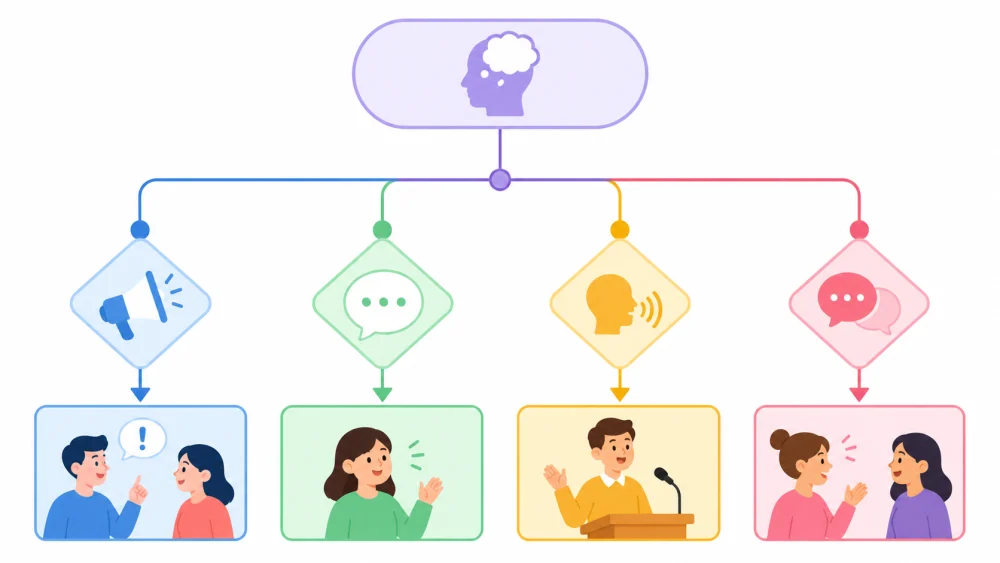
- Tell 需要有人接收。你一定是 tell 某人。
- Say 聚焦在說出口的內容本身。你 say 某件事。
- Speak 偏正式,通常描述發言這個動作,或是「會說某種語言」。
- Talk 是日常用語,暗示雙向對話。
- 固定片語如「tell the truth」和「say goodbye」不遵守一般規則,要另外記。
這四個字到底是什麼意思?
Tell — 需要有接收對象
這四個動詞裡,只有 tell 要求後面緊接一個人。你 tell 她、tell 全班、tell 你媽。少了那個接收對象,句子就不成立。
把 tell 想成交包裹:這個包裹從一開始就有指定收件人。
Say — 聚焦在說出的話
Say 鎖定的是說出口的實際內容。「She said hello.」「He said that he was tired.」注意「said」和訊息之間沒有夾著人?這正是它和 tell 最關鍵的差別。
你可以加上接收者,但只能用「to」:「She said something to me.」永遠不能說「She said me something.」
Speak — 帶點正式感
Speak 有一種正式的份量。教授在研討會上 speaks、你 speak 一種語言、總統 speaks to the nation。它最適合用在單方向傳遞訊息,或想讓語氣顯得正式的場合。
Talk — 雙向交流
Talk 是廚房餐桌邊會說的動詞。兩個朋友 talk、同事 talk about a project。它暗示有來有往——是對話,不是演講。如果說 speak 穿西裝,那 talk 就是穿牛仔褲。
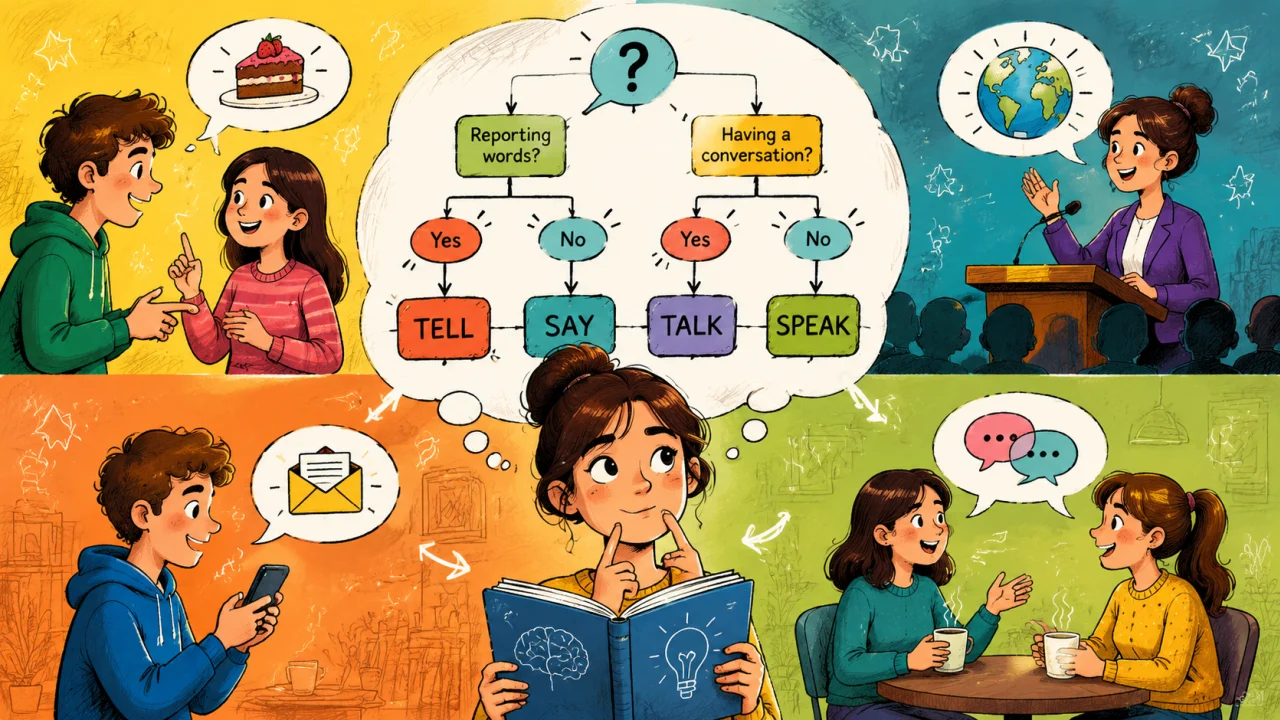
每次選對動詞的方法(簡單決策樹)
按順序跑這四個問題。第一個答「是」的,就是你要用的動詞。
第 1 步:你在把資訊給特定的人嗎?
是的話,用 tell。「I told Jake the news.」資訊從你流向一個指定的接收者。
第 2 步:你在引用或重複別人的原話嗎?
是的話,用 say。「She said, 'I'll be there at 3.'」直接引語和間接引語都找 say。
第 3 步:這是正式或單向的場合嗎?
是的話,用 speak。「The dean will speak at commencement.」一個人對一群人發言,或描述語言能力:「He speaks Mandarin.」
第 4 步:這是輕鬆的雙向聊天嗎?
是的話,用 talk。「We talked for two hours last night.」兩人或多人互相交流想法。
4 條讓 Tell 和 Say 不再混淆的文法規則
規則 1:Tell 幾乎一定要有受詞(Tell 某人)
這條規則讓最多學習者踩坑。你不能只說「He told that he was leaving.」一定要有人在裡面:「He told me that he was leaving.」
規則 2:Say 的直接受詞不能是人
這是規則 1 的反面。「She said me the answer」永遠是錯的。只有「She said the answer」或「She told me the answer」。
規則 3:固定片語打破規律——這些要背
英文超愛例外。以下是 tell 不需要受詞的主要固定片語:
- Tell the truth(說實話)
- Tell a lie(說謊)
- Tell a story(講故事)
- Tell the time(看時間)
- Tell the difference(分辨差異)
- Tell a joke(講笑話)
Say 也有自己的固定夥伴:say goodbye、say sorry、say a prayer、say a word。
沒有捷徑,就是要記。用字卡把每個片語寫下來,反覆練到反射動作為止。
規則 4:間接引語會決定你用哪個動詞
轉述別人說的話時,tell 和 say 都可以用——但結構不一樣。
- Say:「She said (that) she was tired.」
- Tell:「She told me (that) she was tired.」
看出差別了嗎?Tell 要插入一個人,say 不用。意思完全相同,但文法結構不同。
Tell vs Say vs Speak vs Talk — 並排比較表
| 特徵 | Tell | Say | Speak | Talk |
|---|---|---|---|---|
| 後面需要接人嗎? | 是(通常) | 否 | 否 | 否 |
| 用來引用原話? | 很少 | 是 | 否 | 否 |
| 正式程度 | 中性 | 中性 | 正式 | 非正式 |
| 溝通方向 | 單向 | 單向 | 單向 | 雙向 |
| 常用介系詞 | tell + 人 | say + to | speak + to/with/at | talk + to/about |
| 範例 | Tell me your name. | Say hello. | Speak clearly. | Talk to your friend. |
你現在可能還在犯的常見錯誤
說「He Told That」而不是「He Said That」
根據 Betty Azar 的文法教材《Understanding and Using English Grammar》(初版於 1970 年),這是美國 ESL 課堂最常見的第 1 號錯誤。如果 tell 後面沒有接人,就換成 say。
錯:「He told that the store was closed.」 對:「He said that the store was closed.」/「He told us that the store was closed.」
在工作信件裡混用「Talk to」和「Speak with」
你在寫職場電郵嗎?「I'd like to speak with you」聽起來專業。「I wanna talk to you」聽起來像要找人理論。在美國,正式工作信件用「speak with」是更穩的選擇。
間接引語裡用 Say 代替 Tell 表達指示
「She said me to wait」是錯的。這裡要用 tell:「She told me to wait.」只要是在對某人下指示,tell 才是對的動詞。
可以直接開口練習的真實對話
把這些例子念出聲。認真的——聽到自己說出正確的動詞,比默默閱讀更快建立語感。
在學校
- 「Can you tell me where the library is?」
- 「The teacher said, 'Open your books to page 42.'」
- 「We need to talk about your grade on the midterm.」
在門市
- 「Tell me about this laptop's battery life.」
- 「The salesperson said it lasts 10 hours.」
- 「I spoke with the manager about a return.」
在電話裡
- 「I need to talk to you about Saturday.」
- 「She told me she can't make it.」
- 「He didn't say why he canceled.」

大多數人跳過的片語動詞和慣用語
這裡有個比較少人講的觀點:記住 tell、say、speak、talk 的片語動詞,比背文法規則更重要。為什麼?因為美國母語者在日常對話裡頻繁使用這些片語,而任何決策樹都無法幫你在對話當下即時解碼。
Tell Apart、Tell Off、Tell On——它們真正的意思
- Tell apart: 分辨兩者的差異。「I can't tell the twins apart.」
- Tell off: 斥責某人。「His boss told him off for being late.」(主要流行於英式英語,但美國人也聽得懂。)
- Tell on: 打小報告。「She told on her brother.」這個用法在小學最常見,但大人也會帶點玩笑地用。
慣用語裡的 Say 和 Speak——「Say the Word」和「Speak Up」
- Say the word: 給出許可或暗號。「Just say the word and I'll order pizza.」
- Speak up: 說大聲一點,或勇於表達意見。「If you disagree, speak up.」
- Talk someone into: 說服某人。「She talked me into buying the red one.」
為什麼發音比你想的更重要
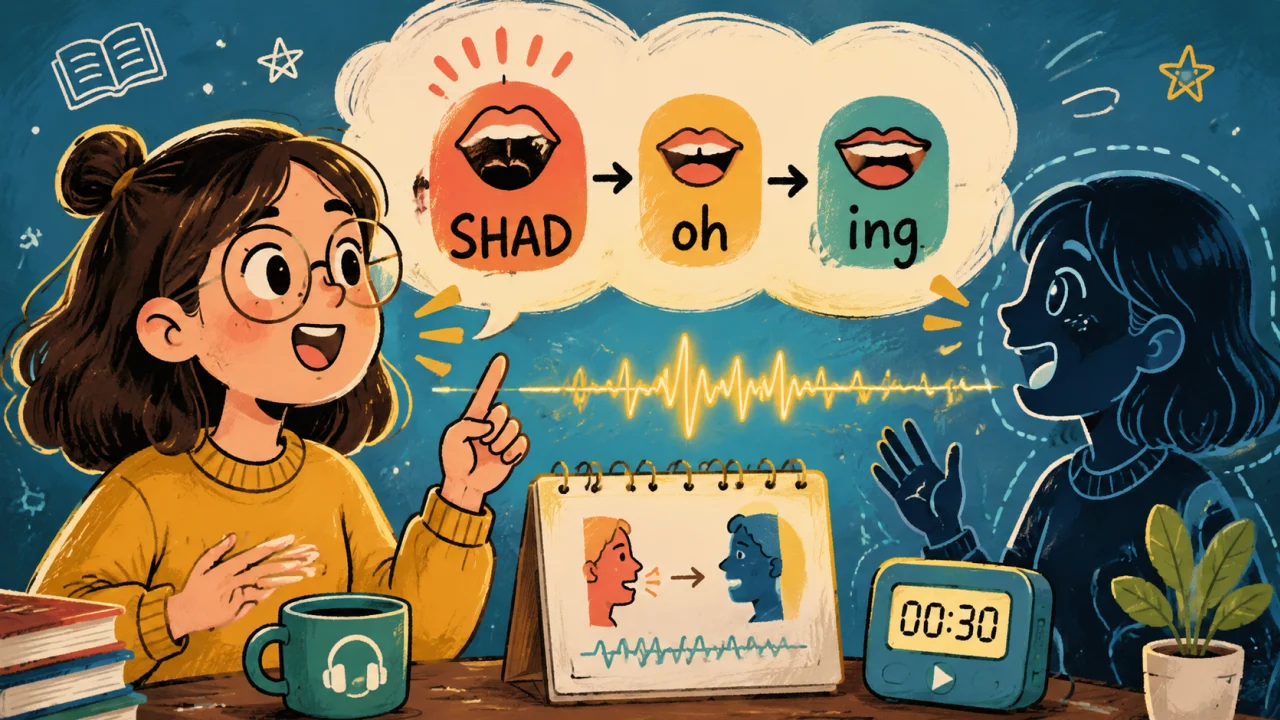
如何發 Tell(/tɛl/)而不說成「Tail」
Tell 的母音是 /ɛ/,就像「bed」的「e」,短促而清晰。如果你把它拉長成 /eɪ/,就變成「tail」了。練習時可以把相似的詞排在一起唸:「bed, tell, red, fell.」把母音固定在嘴巴同一個位置。
美國人如何用重音強調這四個動詞
當美國人在句子裡特別強調 tell,通常帶有糾正或驚訝的語氣。「I told you so」和「I told you so」感覺完全不同。前者強調「告訴這件事確實發生了」,後者強調「是你接到這個消息」。注意哪個詞承受重音——不換一個字,意思就變了。
常見問題
Tell 和 say 有什麼差別,可以舉例嗎?
Tell 後面要接人:「She told me the news.」Say 聚焦在說出的內容:「She said the news was bad.」把資訊指向特定對象時用 tell,報告內容本身時用 say。掌握這個核心差異,大多數情況都能選對。
Tell 可以不接受詞嗎?
只有在固定片語裡可以,例如「tell the truth」、「tell a lie」、「tell the time」、「tell a story」。除了這些固定說法,tell 需要一個人作為受詞,少了它句子就不正確。
是 speak to 還是 speak with?
兩個都對。「Speak to」可以暗示單向溝通(像主管對員工說話),「speak with」則暗示雙方都有參與。在美式英語的職場環境中,「speak with」更為普遍。
什麼時候該用 talk 而不是 speak?
輕鬆的日常對話用 talk:「We talked about the movie.」正式場合、公開演說或描述語言能力時用 speak:「She speaks three languages.」Talk 帶著輕鬆的雙向感,speak 顯得更正式。
間接引語裡怎麼用 tell?
間接引語裡,tell 後面一定要接人:「He told me that the meeting was at noon.」對照 say:「He said that the meeting was at noon.」兩句意思完全一樣,但 tell 必須有那個接收對象放在後面。
Tell 的中文是什麼?
Tell 翻成中文最接近「告訴」(gàosù)。跟英文動詞一樣,告訴也是把資訊指向特定的人。「Tell me your name」就是「告訴我你的名字」。這個對應關係相當直觀,對中文母語者來說是很好的記憶錨點。